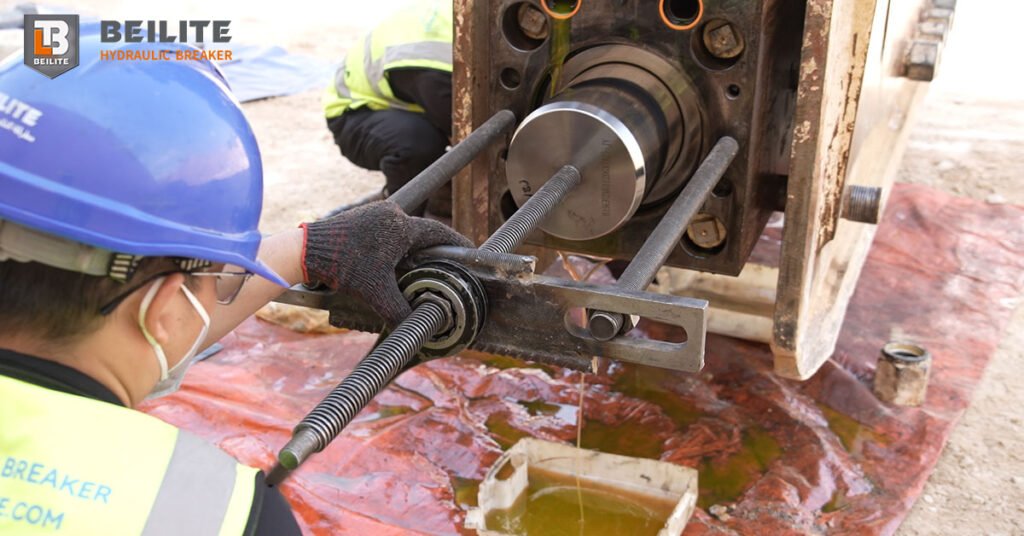
A hydraulic breaker that suddenly becomes weak can slow down excavation, demolition, and quarrying work. Operators may notice reduced impact force, slower operation, or inconsistent blows.
However, loss of hydraulic breaker impact power does not always mean the breaker itself is damaged. The problem may come from the excavator’s hydraulic system, incorrect settings, or worn internal components.
8 Common Reasons a Hydraulic Breaker Loses Power
1. Insufficient hydraulic oil flow
Low auxiliary flow can reduce the breaker’s operating speed and affect its performance.
2. Incorrect working pressure
If the hydraulic pressure is below the manufacturer’s required range, the breaker may not operate correctly.
3. Incorrect nitrogen pressure
For nitrogen-assisted breakers, an incorrect gas charge can affect impact performance. Check it according to the manufacturer’s instructions.
4. Hydraulic oil contamination
Dirty or degraded oil can affect valves, seals, and internal hydraulic components.
5. Blocked hydraulic filters
Restricted filters can reduce oil supply and interfere with hydraulic performance.
6. Excessive return-line back pressure
A restricted return line can create excessive back pressure, heat, and reduced operating efficiency.
7. Worn seals or internal components
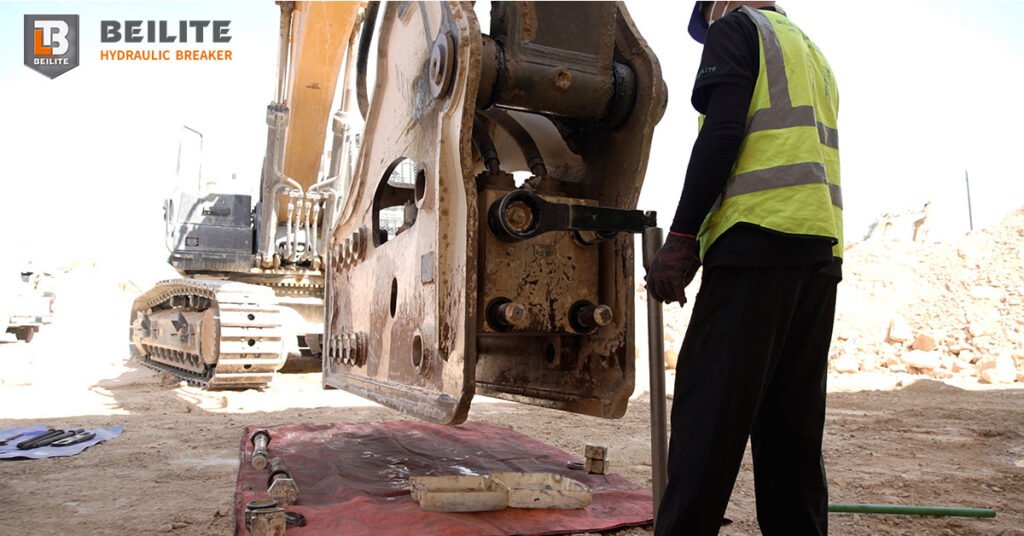
Damaged seals, worn pistons, and valve problems can reduce performance and may require professional servicing.
8. Incorrect operating technique
Insufficient downforce, poor tool positioning, and blank firing can affect performance and increase wear.
How to Troubleshoot a Weak Hydraulic Breaker
Before replacing parts, follow a basic inspection process:
| Check | What to investigate |
| Hydraulic flow | Confirm actual auxiliary oil flow |
| Operating pressure | Compare measured pressure with specifications |
| Nitrogen charge | Check if applicable to the breaker design |
| Hydraulic oil | Inspect oil condition and temperature |
| Filters and hoses | Check for blockages, restrictions, and leaks |
| Breaker components | Inspect the tool, seals, piston, and valve |
Start with the excavator’s hydraulic supply before assuming that the breaker requires internal repairs.
How to Prevent Hydraulic Breaker Power Loss
- Regular maintenance helps reduce unexpected breakdowns.
- Use the correct hydraulic oil.
- Replace filters according to the maintenance schedule.
- Inspect hoses and hydraulic connections.
- Check hydraulic flow and pressure.
- Maintain the correct nitrogen charge where applicable.
- Keep the tool and bushings properly maintained.
- Avoid prolonged blank firing and incorrect operating techniques.
If the breaker continues to lose impact power, stop operation and arrange a professional inspection.
Choose a Reliable Hydraulic Breaker from Beilite
Consistent breaking performance starts with choosing the right equipment and maintaining it correctly.
Beilite supplies hydraulic breakers for suitable excavator applications in construction, mining, quarrying, and demolition.
Before choosing a replacement or upgrading your breaker, confirm excavator compatibility, hydraulic flow, working pressure, and mounting dimensions.
Visit Beilite Products or review the hydraulic breaker specifications for more information.
Frequently Asked Questions
1. Why is my hydraulic breaker hitting weakly?
Possible causes include insufficient hydraulic flow, incorrect pressure, an incorrect nitrogen charge, internal wear, or poor operating technique.
2. Can low nitrogen pressure reduce breaker impact power?
Yes. For nitrogen-assisted breaker designs, an incorrect nitrogen charge can affect impact performance. Follow the manufacturer’s recommended checking procedure.
3. Should I increase hydraulic pressure when my breaker loses power?
No. First identify the cause and measure the hydraulic system. Increasing pressure without checking specifications can damage the breaker or excavator.