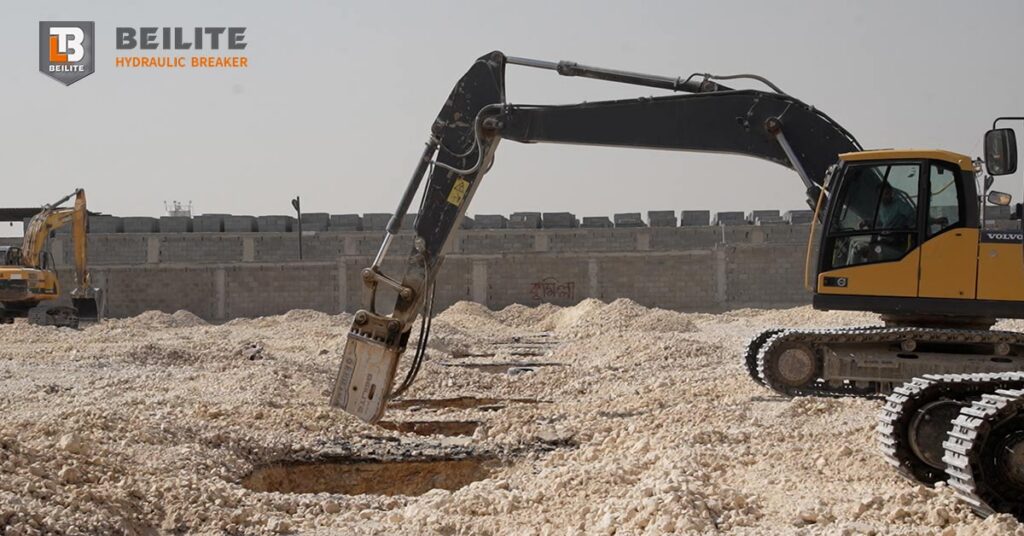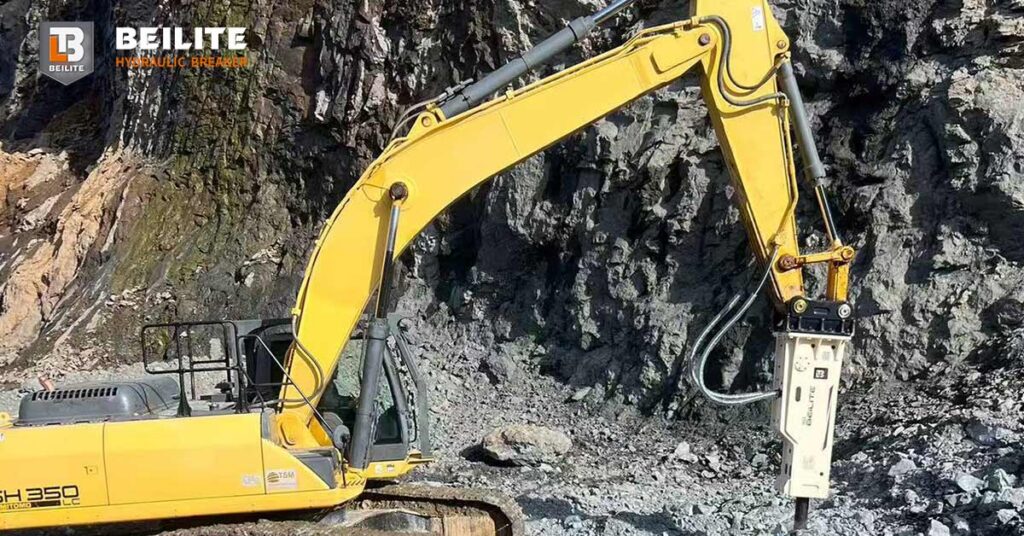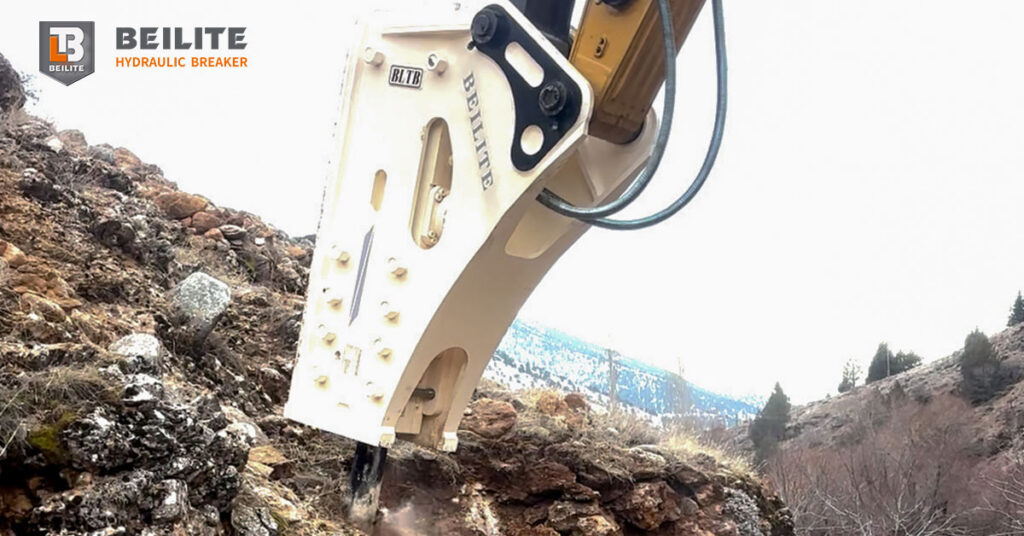
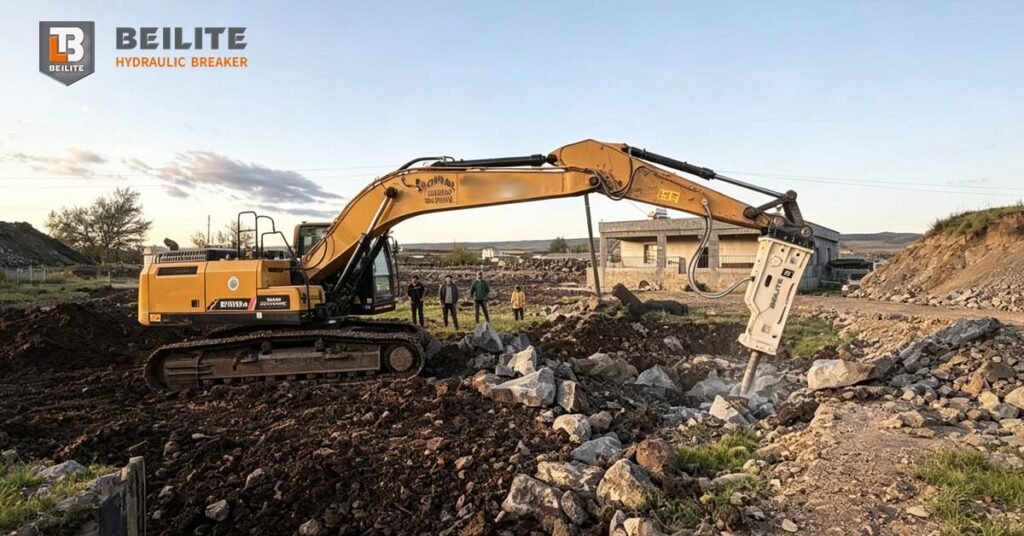
Looking for the right hydraulic breaker for a CAT 320 or CAT 330 excavator in South Africa?
The first thing to check is not the breaker price. It is carrier compatibility.
A hydraulic breaker must match the excavator’s operating weight, hydraulic system, attachment configuration, and working application. Choosing an attachment that is too small can reduce productivity, while one that is too heavy can place unnecessary loads on the carrier.
This guide explains how South African contractors can choose, maintain, and support hydraulic breakers for CAT 320 and CAT 330 excavators.
CAT 320 vs CAT 330: Why Breaker Size Matters
The current Cat 320 listed for South Africa has an operating weight of approximately 21,300 kg, depending on configuration. Cat’s published specification also gives a maximum main implement flow of 429 L/min.
The Cat 330 is substantially larger, with a published operating weight of approximately 31,400 kg in the South African specification.
That difference is important.
A hydraulic breaker selected for a CAT 320 should not automatically be transferred to a CAT 330 simply because both machines are excavators.
Carrier weight class is one of the first specifications to check.
Hydraulic Breaker for CAT 320
For a CAT 320-class excavator, the Beilite BLT-140 is specified for 20 – 24 tons excavators.
Its key specifications include:
- Carrier: 20 – 24 t
- Silenced breaker weight: 1,910 kg
- Chisel diameter: 140 mm
- Working oil flow: 120 – 180 L/min
- Working pressure: 160 -180 bar
- Impact rate: 350 – 500 bpm
- Relief pressure: 210 bar
- Chisel length: 1,250 mm
These specifications place the BLT-140 in the appropriate carrier class for a CAT 320-sized excavator, subject to checking the exact machine configuration and hydraulic circuit.
For contractors working in Johannesburg, Pretoria, Cape Town, Durban, Gqeberha, Bloemfontein, Polokwane, Mbombela and other South African construction and mining regions, this type of matching is more important than simply selecting a breaker based on the excavator model name.
What About a CAT 330?
The CAT 330 belongs to a significantly heavier excavator class.
The South African Cat 330 specification lists an operating weight of approximately 31,400 kg for the stated configuration.
Therefore, a 20 – 24 tonne breaker such as the BLT-140 should not automatically be treated as the correct breaker for a CAT 330.
For a CAT 330, the breaker should be selected from the appropriate larger carrier class after checking:
- Excavator operating weight
- Auxiliary hydraulic flow
- Working pressure
- Breaker operating weight
- Mounting dimensions
- Boom and stick configuration
- Application
- Required breaking productivity
Beilite’s published range places the BLT-155 at 27 – 33 tonnes and the BLT-165 at 33-38 tonnes, illustrating how breaker selection moves into a different class as carrier weight increases.
The exact CAT 330 configuration should therefore be checked before selecting the breaker model.
Why Operating Weight Is Important?
Operating weight is more than a number on a machine brochure.
When a breaker replaces the bucket, the excavator must safely handle the attachment during positioning, breaking, lifting and travel.
The breaker itself also has considerable weight.
For example, the BLT-140 silenced model weighs approximately 1,910 kg.
An attachment that is too heavy can affect:
- Machine stability
- Boom and stick loading
- Working reach
- Operator control
- Transport requirements
- Overall operating efficiency
This is why professional breaker selection starts with the carrier, not simply the breaking power.
Carrier Compatibility: What South African Buyers Should Check
Before ordering a hydraulic breaker for a CAT 320 or CAT 330, confirm these points.
1. Excavator operating weight
Check the actual operating configuration rather than relying only on the model number.
2. Hydraulic flow
The breaker must operate within the excavator’s available auxiliary flow range.
3. Hydraulic pressure
Check the carrier’s auxiliary pressure against the breaker’s required working pressure.
4. Attachment weight
Confirm that the breaker is appropriate for the excavator’s boom, stick and stability requirements.
5. Mounting dimensions
Pin diameter, pin centres, bracket dimensions and working geometry must match.
6. Application
Breaking concrete in central Johannesburg is different from breaking hard rock in a quarry.
The breaker should be selected for the actual material and production requirement.
Hydraulic Breakers for South African Construction and Mining
South African contractors use hydraulic breakers across a wide range of applications.
Common uses include:
Demolition: reinforced concrete, structures and foundations.
Road construction: asphalt, concrete pavement and hard ground.
Mining: rock excavation and secondary breaking.
Quarrying: breaking oversized material and hard rock.
Infrastructure: trenches, pipelines, bridges and municipal projects.
Recycling: reducing concrete and construction materials for further processing.
Beilite South Africa identifies demolition, infrastructure construction, municipal engineering, mining and quarrying, and recycling among its hydraulic-breaker applications.
Spare Parts Support for CAT 320 and CAT 330 Rock Breakers
A hydraulic breaker is a high-impact attachment. Even a well-maintained unit will eventually require wear components.
For South African contractors, spare-parts availability should be considered before buying the breaker.
Common hydraulic-breaker replacement parts include:
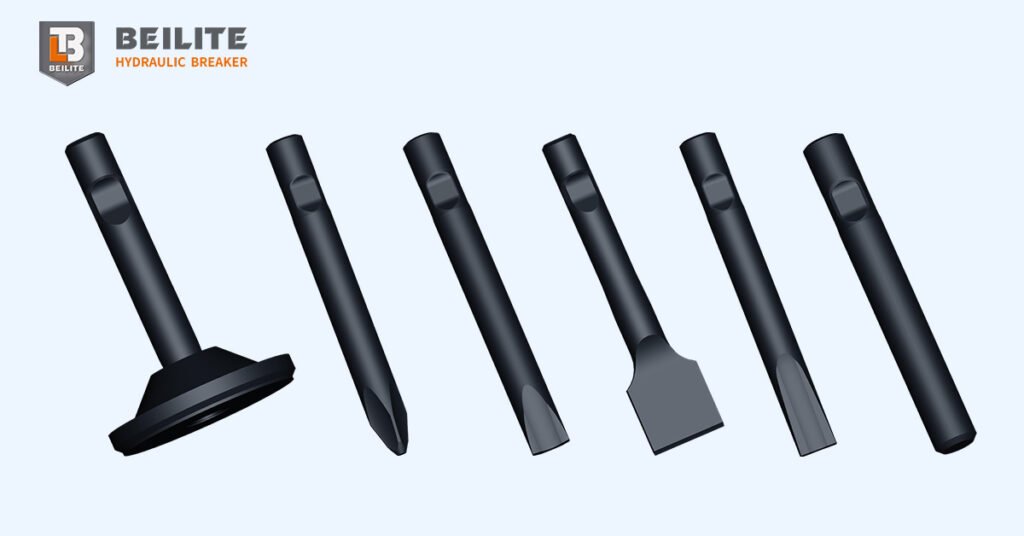
- Chisels and working tools
- Tool retainers
- Bushings
- Seal kits
- Pistons
- Accumulators
- Diaphragms
- Control valves
- Through bolts
- Side bolts
- Wear plates
- Hydraulic hoses
Beilite South Africa specifically highlights spare-parts availability and maintenance support as part of its hydraulic-hammer offering.
For contractors, the real cost of a breaker is not only its purchase price.
Downtime Costs Money.
Having commonly required parts available can help reduce unnecessary equipment downtime.
Hydraulic Breaker Maintenance in South Africa
Correct maintenance can extend breaker service life and help maintain consistent performance.
Operators should routinely:
Grease the working tool according to the manufacturer’s requirements.
Inspect the chisel for abnormal wear or damage.
Check bushings and replace them when they reach the specified wear limit.
Inspect hydraulic hoses for leaks, abrasion and damage.
Check accumulator and nitrogen pressure according to the manufacturer’s specifications.
Use the correct hydraulic oil recommended for the carrier.
Avoid Blank Firing
Keep the breaker correctly aligned with the material during operation.
Beilite’s published wear guidance provides specific replacement dimensions for different breaker models, including the BLT-140, rather than relying only on visual inspection.
CAT 320 / CAT 330 Breaker Buying Checklist
Before purchasing, ask your supplier for confirmation of:
- Excavator operating weight
- Breaker operating weight
- Required oil flow
- Working pressure
- Relief pressure
- Mounting dimensions
- Working tool diameter
- Impact rate
- Spare-parts availability in South Africa
- Maintenance and technical support
If these specifications match, you have a much stronger basis for selecting the correct breaker.
FAQs
What hydraulic breaker is suitable for a CAT 320?
For a CAT 320-class excavator, the Beilite BLT-140 is specified for the 20 -24 tonne carrier class. Its silenced configuration weighs 1,910 kg and requires 120 – 180 L/min of working oil flow. Final compatibility should be checked against the exact CAT 320 configuration.
Is the same breaker suitable for CAT 320 and CAT 330?
Not necessarily. A CAT 320 and CAT 330 have substantially different operating weights. The current South African specifications list approximately 21.3 tonnes for the CAT 320 and 31.4 tonnes for the CAT 330.
What should I check before fitting a breaker to a CAT excavator?
Check carrier operating weight, breaker weight, hydraulic oil flow, working pressure, mounting dimensions and application requirements.
Are hydraulic breaker spare parts available in South Africa?
Beilite South Africa lists spare-parts availability and maintenance support as part of its hydraulic-breaker offering. Common wear parts include chisels, bushings, seals, retainers and other internal components.
How can I extend hydraulic breaker service life?
Regular greasing, hydraulic hose inspection, correct nitrogen pressure, bushing inspection, proper hydraulic oil and avoiding blank firing are important maintenance practices.
Choose the Hydraulic Breaker by Carrier, Not Just by Brand
For CAT 320 and CAT 330 excavators in South Africa, the right hydraulic breaker depends on the complete machine and application not simply the word “CAT” or the excavator model number.
For a CAT 320-class machine, the BLT-140 20 – 24 tonne breaker provides a clearly defined starting point.
For a CAT 330, a larger breaker class should be evaluated based on the machine’s actual operating weight and hydraulic configuration.
The best result comes from matching carrier + breaker weight + hydraulic system + application + spare-parts support.
That combination helps South African contractors improve productivity while keeping maintenance and downtime under control.
Submit Request Quote
Beilite South Africa Supplier Contacts
Tel: +27 646876799
WhatsApp: +27 646876799
Email: [email protected]