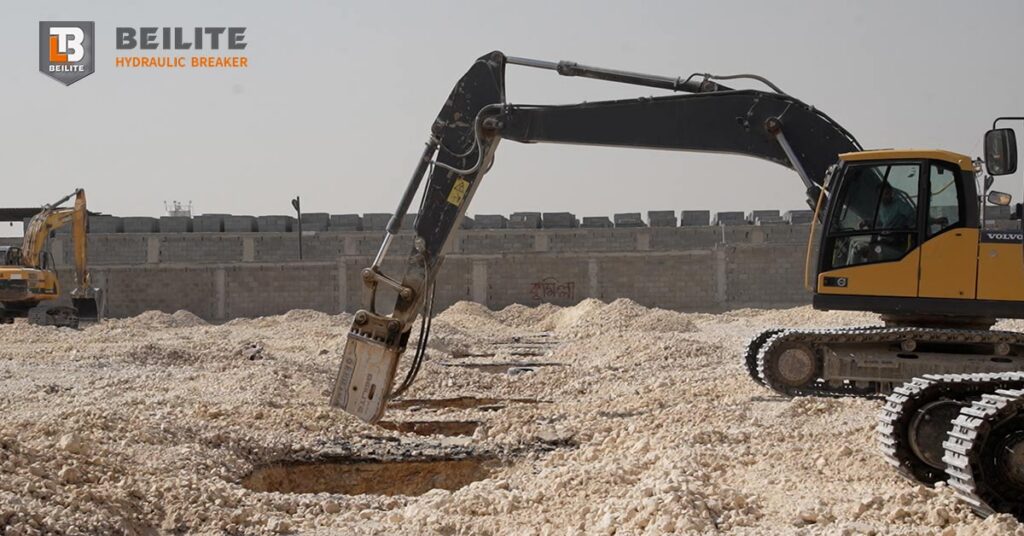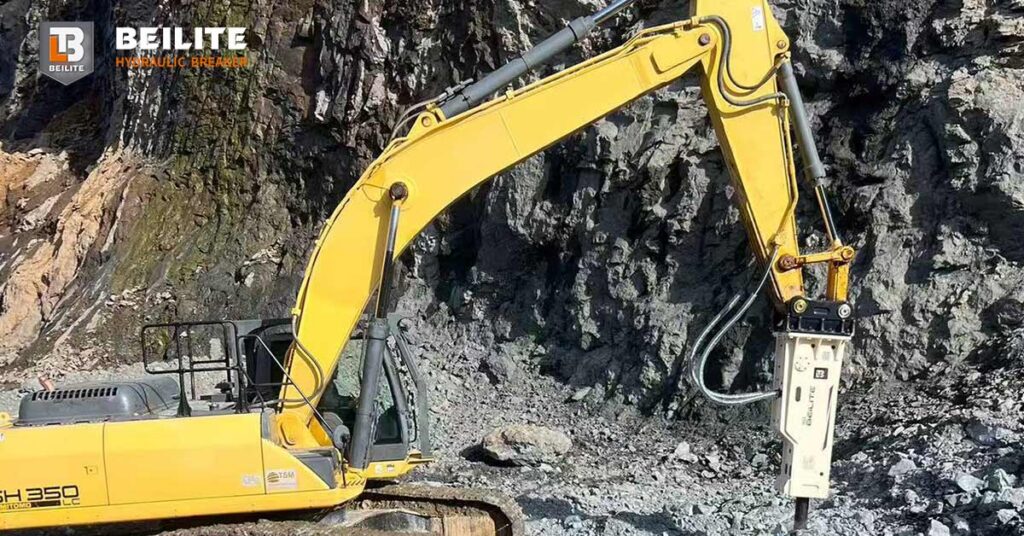
Deploying heavy rock breakers in open-cast South African mines is a balancing act between high-impact production and mechanical preservation.
To maximize machine performance, operators must understand the exact physics of hydraulic energy transfer.
When breaking primary oversize ore in Witbank coal fields or Rustenburg platinum pits, the wrong operational technique can destroy an excavator’s main hydraulic pumps within weeks.
Here is the essential operational and mechanical data required to run heavy hydraulic hammers efficiently.
1. Operating Weight & Carrier Matching
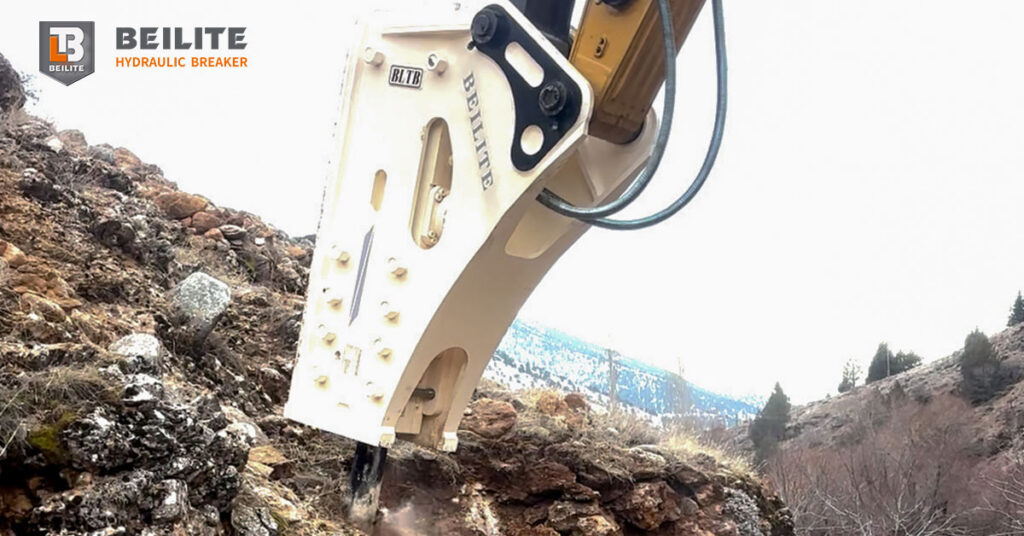
An excavator cannot perform efficiently if it is structurally mismatched with its attachment.
If the rock breaker is too heavy, the excavator loses stability, risking tipping on uneven pit benches.
If the hydraulic breaker is too light, the carrier absorbs the excess blow energy, causing rapid fatigue cracking in the excavator boom and arm.
2. Managing Hydraulic Flow and Pressure
Operators must monitor the carrier’s auxiliary hydraulic settings before striking rock.
Every heavy rock breaker operates within strict oil flow rates (measured in liters per minute) and operating pressure parameters (bars).
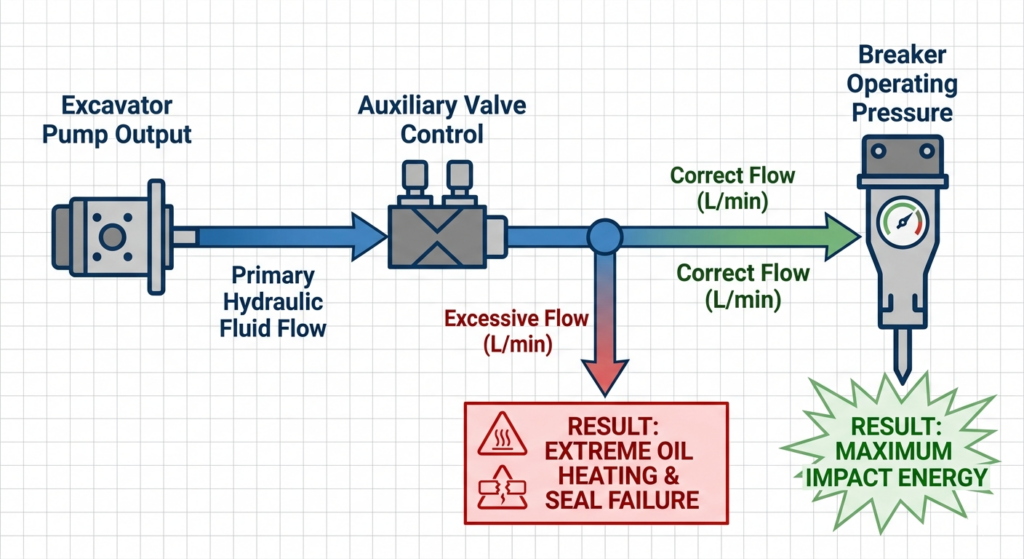
Running excessive flow does not increase impact force; it simply generates extreme heat, thins the hydraulic oil, and destroys the excavator’s internal seals.
3. High-Production Mining Applications
In South African open-pit operations, heavy rock breakers handle three distinct primary applications.
- Primary Breaking: Reducing massive oversize blocks blasted from the rock face before they reach the primary crusher.
- Bench Scaling: Clearing loose, hanging rock walls along the pit benches to prevent dangerous rockfalls on lower working levels.
- Trenching & Floor Leveling: Cutting through hard bedrock floors to create stable haul roads for high-tonnage mining trucks.
4. What Skilled Operators Look For
Experienced mining operators do not just sit back and hold the joystick; they monitor real-time mechanical feedback.
They look for solid tool penetration, steady hydraulic temperature gauges, and minimal vibration transfer through the cabin structure.
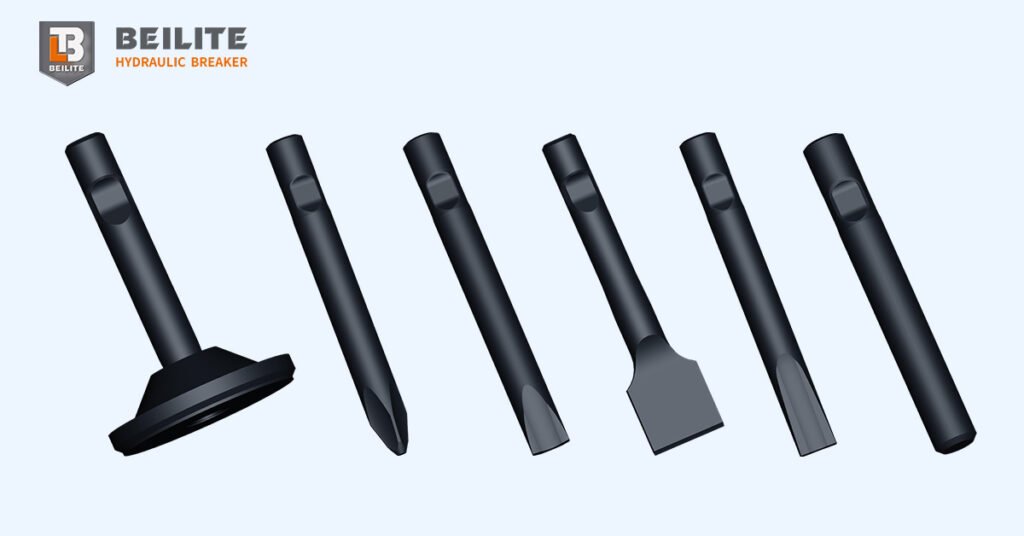
Critical Checklist: Operators look for a tight fit between the tool shank and the chuck bushing to prevent internal piston misalignment.
If the grease film disappears or the tool starts dancing irregularly inside the housing, operations must pause immediately for manual lubrication.
5. Correct Usage vs Destructive Habits
Maximum excavator performance depends entirely on the operator’s strike angles and cycle times.
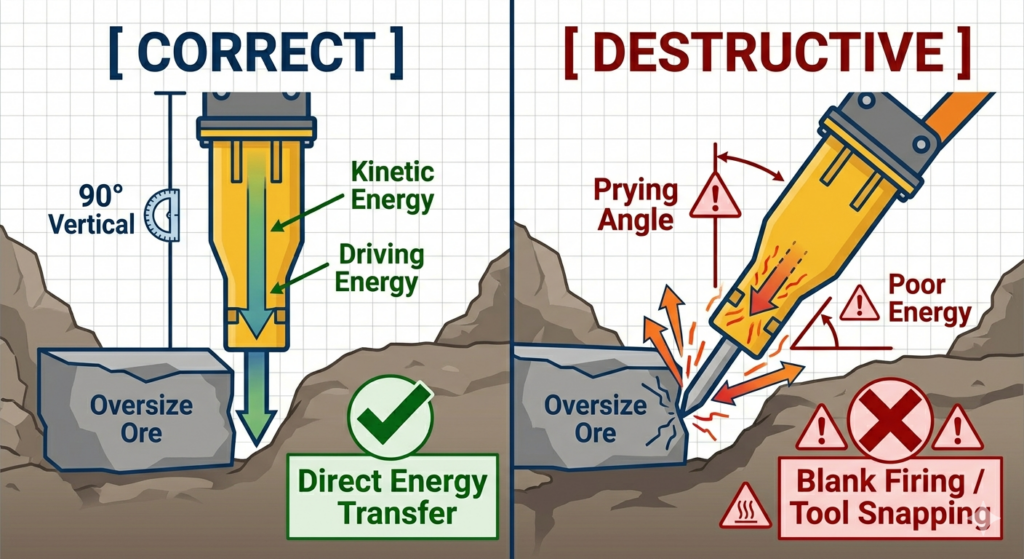
Never use the rock breaker as a crowbar to pry rock apart while the hammer is cycling, as this bends the tool shank.
Always maintain a strict 90-degree angle to the rock face to ensure 100% of the kinetic energy moves directly into the ore fraction.
Contact Beilite South Africa for Hydraulic Hammers & Spare Parts
Tel: +27 646876799
WhatsApp: +27 646876799
Email: [email protected]