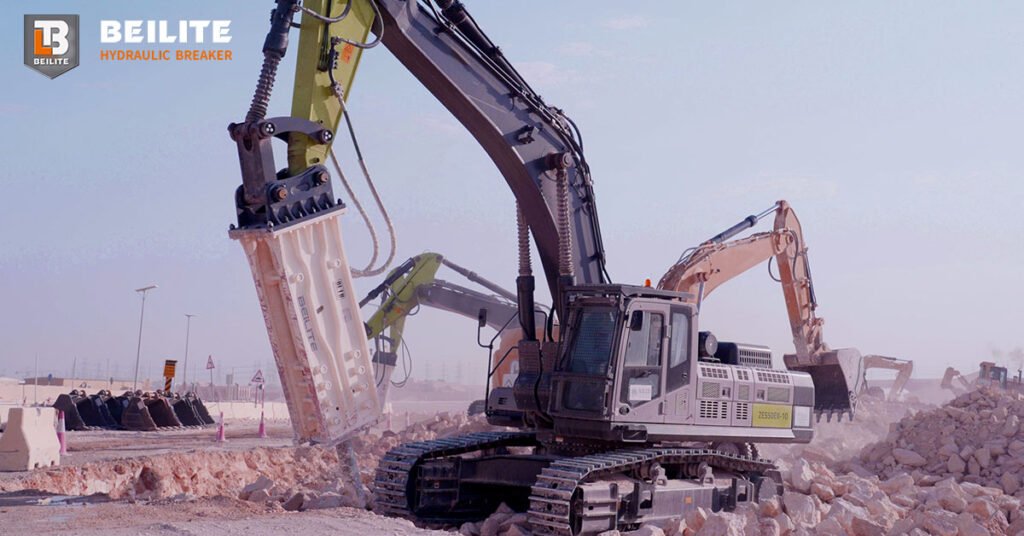
1. Crawler Excavators: General Mining and Earthmoving
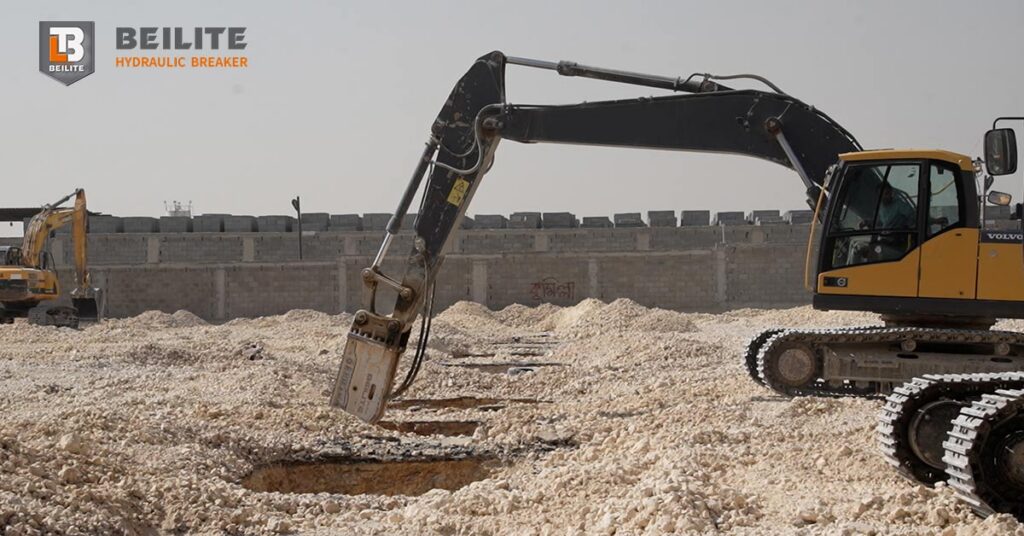
Crawler excavators are among the most widely used machines in mining and quarrying. Their tracked undercarriage provides traction and stability on uneven, loose, and challenging ground.
Main applications:
- Removing overburden and excavating soil.
- Loading rock, ore, and waste into dump trucks.
- Quarry excavation and material handling.
- Site preparation and mine development.
Best suited for: Open-pit mining, quarrying, and general heavy-duty earthmoving.
2. Hydraulic Mining Shovels: High-Volume Material Loading
Hydraulic mining shovels are large excavators designed to handle substantial volumes of material. They are available in front-shovel and backhoe configurations.
Front shovels are particularly useful for digging and loading material from a mining face, while backhoes are suited to digging below machine level.
Main applications:
- Loading large mining haul trucks.
- Excavating blasted rock and mineral deposits.
- High-volume material handling.
- Large-scale open-pit mining.
Best suited for: Large mines requiring high production and efficient truck loading.
3. Dragline Excavators: Overburden Removal
Dragline excavators are massive machines that use a suspended bucket, cables, and a long boom to remove material over considerable distances.
They are particularly important in large open-cast coal mining operations, where removing overburden is a major part of production.
Main applications:
- Stripping overburden.
- Removing soil and loose material above mineral deposits.
- Large-scale surface mining.
- Excavating extensive areas without frequently relocating the machine.
Best suited for: Large open-cast mines with substantial overburden-removal requirements.
4. Electric Rope Shovels: Heavy-Duty Mining Operations
Electric rope shovels use electric motors, cables, and mechanical systems to dig and load large quantities of rock and blasted material.
They are designed for demanding, continuous production environments and are commonly paired with large-capacity mining trucks.
Main applications:
- Loading blasted rock and ore.
- High-volume open-pit mining.
- Large-scale copper, iron ore, and other mineral operations.
Best suited for: Large mines with consistent production requirements and suitable electrical infrastructure.
5. Front Shovel Excavators: Digging Above Machine Level
A front shovel excavator is configured with its bucket facing outward and upward, allowing it to dig and load material from a face above the machine’s working level.
This configuration is useful when working against high excavation faces.
Main applications:
- Excavating hard and blasted material.
- Loading haul trucks.
- Working on elevated mining benches.
- Large-scale quarry and open-pit operations.
Best suited for: Mining sites requiring controlled excavation and loading from higher faces.
6. Underground Mining Excavators: Confined-Space Excavation
Underground excavators are specialized machines designed for restricted working spaces. They are generally more compact than large surface-mining excavators and may have low-profile configurations.
Depending on the mine and equipment design, they support excavation, scaling, material handling, and underground development.
Main applications:
- Underground mine development.
- Excavation and removal of broken rock.
- Mine maintenance and support work.
- Working in confined underground areas.
Best suited for: Underground mining projects where machine dimensions, visibility, ventilation, and safety are critical.
How to Choose the Right Mining Excavator
Before purchasing mining machinery in South Africa, buyers should consider:
- Mining method: Open-pit, underground, quarrying, or surface excavation.
- Material characteristics: Rock hardness, density, fragmentation, and excavation conditions.
- Production capacity: Required tones per hour and bucket capacity.
- Operating costs: Fuel or electricity consumption, maintenance, and wear parts.
- Parts and technical support: Availability of local service, components, and trained technicians.
- Equipment compatibility: Ensure attachments and hydraulic systems match the machine’s specifications.
The most expensive or largest excavator is not necessarily the most economical choice. The right machine should meet production requirements while maintaining a competitive operating cost per tonne.
Can Hydraulic Breakers Be Used in Mining?
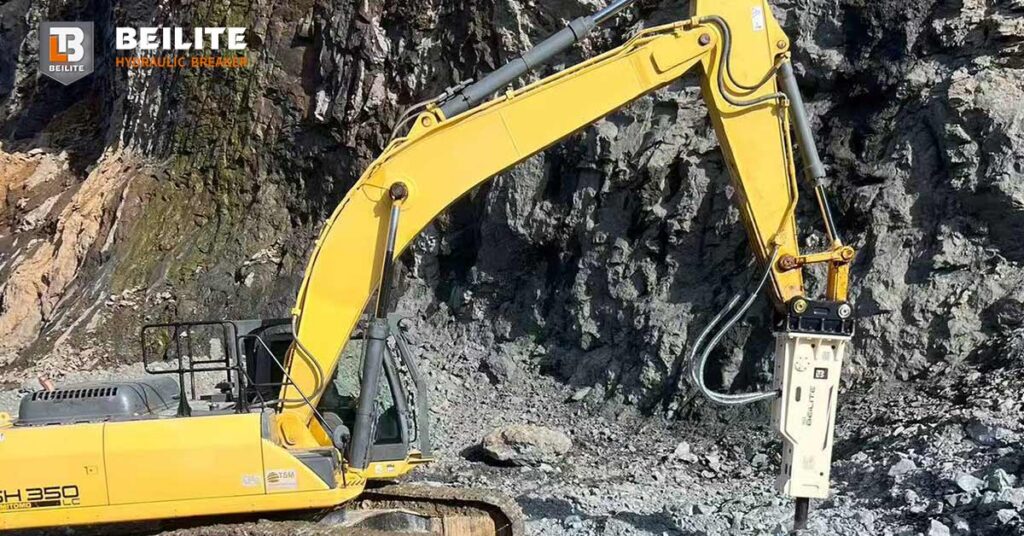
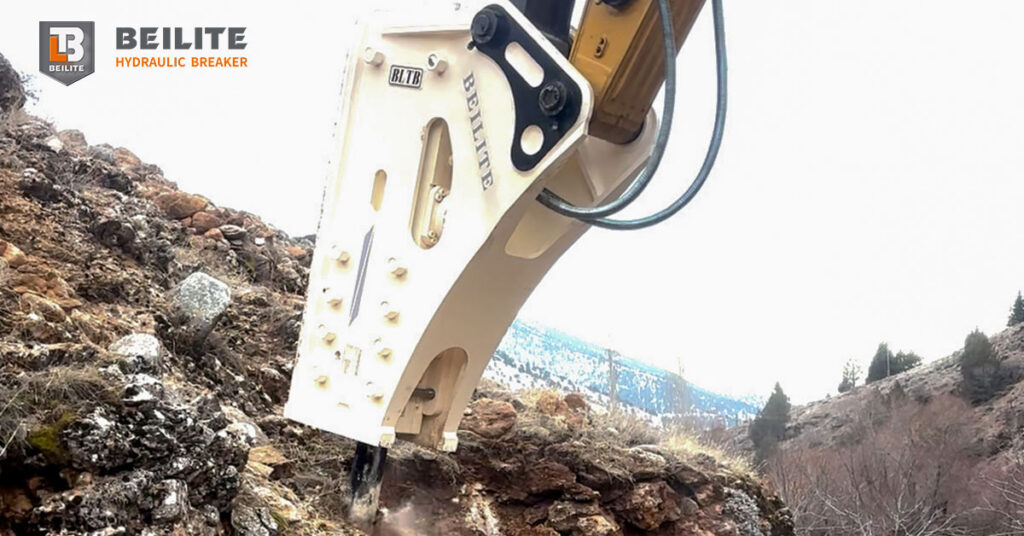
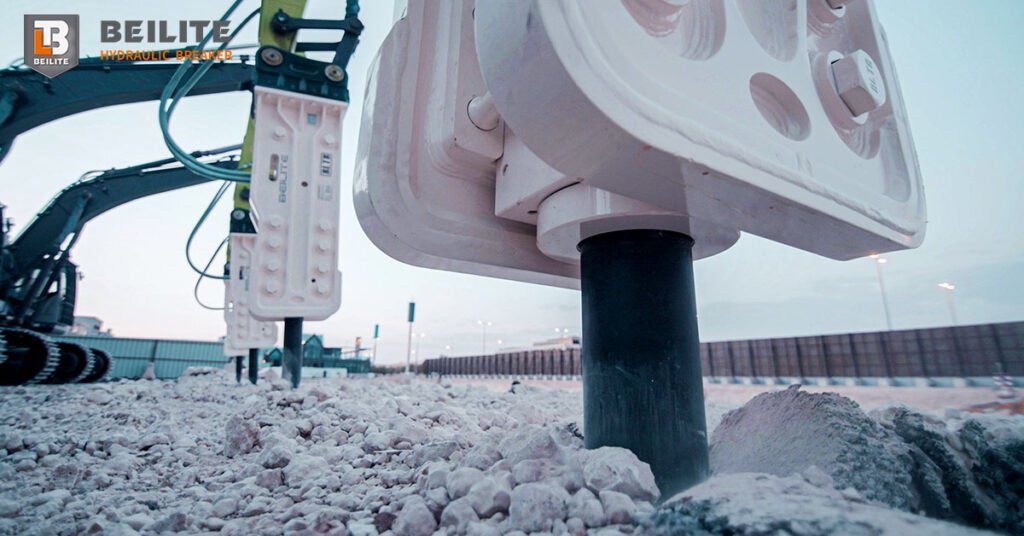
Yes. Hydraulic breakers are useful attachments for suitable mining and quarrying applications, particularly where excavators need to break oversized rocks, hard material, or concrete.
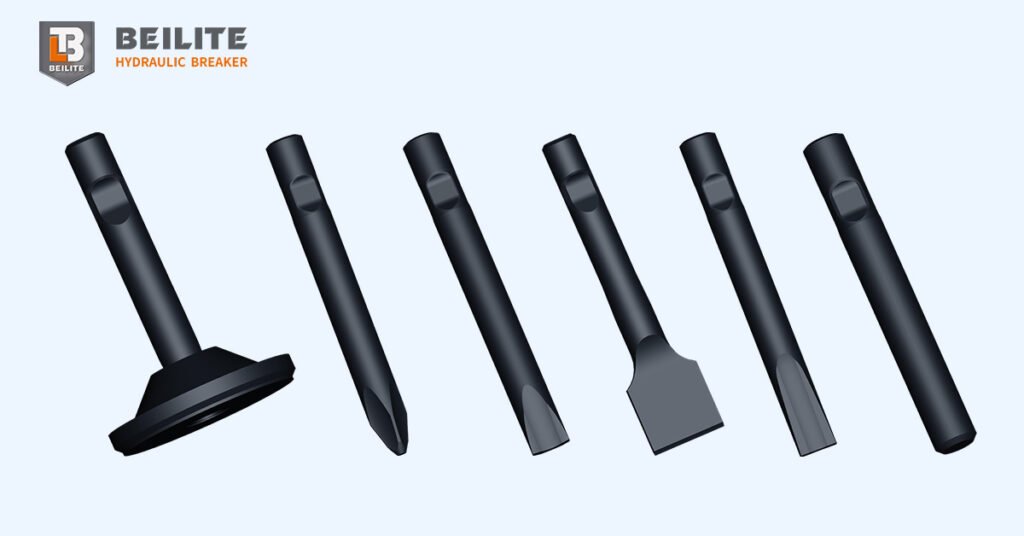
Beilite Hydraulic Breakers provide excavator-mounted breaking solutions for construction, mining, quarrying, and demolition applications.
Before choosing a breaker, check the excavator’s operating weight, hydraulic oil flow, working pressure, and mounting dimensions.
Explore the Beilite South Africa Hydraulic Breaker Range and Technical Specifications.
Frequently Asked Questions
1. What type of excavator is best for open-pit mining?
Large crawler excavators, hydraulic mining shovels, front shovels, and electric rope shovels are commonly used. The right choice depends on production targets, material conditions, and haul-truck capacity.
2. What is the difference between a hydraulic mining shovel and a dragline?
A hydraulic mining shovel uses hydraulic systems to dig and load material, while a dragline uses cables and a suspended bucket to remove material over a long reach.
3. Which excavator is suitable for quarrying in South Africa?
Crawler excavators are widely used in quarrying because of their stability and versatility. The required size depends on rock conditions, production volume, and whether the machine will load trucks or operate with attachments.