Excavators are among the most versatile machines in construction, mining, demolition, roadwork, and infrastructure development. From digging foundations and loading materials to breaking rock and demolishing concrete, the right excavator can significantly improve productivity and reduce operating costs.
However, not every excavator is suitable for every job. Machine size, operating weight, digging capacity, hydraulic performance, and attachment compatibility all influence its effectiveness.
This guide explains the main types of excavators, their applications, common attachments, and what buyers should check before investing.
1. What Are the Main Types of Excavators?
Excavators are available in different sizes and configurations to meet specific working conditions.
Mini Excavators
Mini excavators are compact machines designed for restricted working spaces. They are commonly used for landscaping, small construction projects, drainage, utility installation, and residential work.
Their smaller size makes transportation and operation easier on sites with limited access.
Crawler Excavators
Crawler excavators use tracks instead of wheels, providing stability and traction on uneven or soft ground.
They are widely used in mining, quarrying, road construction, earthmoving, and large infrastructure projects.
Wheeled Excavators
Wheeled excavators offer greater mobility on paved roads and hard surfaces. They are commonly used for urban construction, road maintenance, utility work, and municipal projects.
Long-Reach Excavators
Long-reach excavators feature extended booms and arms for applications requiring additional digging distance and working depth.
They are suitable for river maintenance, dredging support, slope work, and deep excavation.
Demolition Excavators
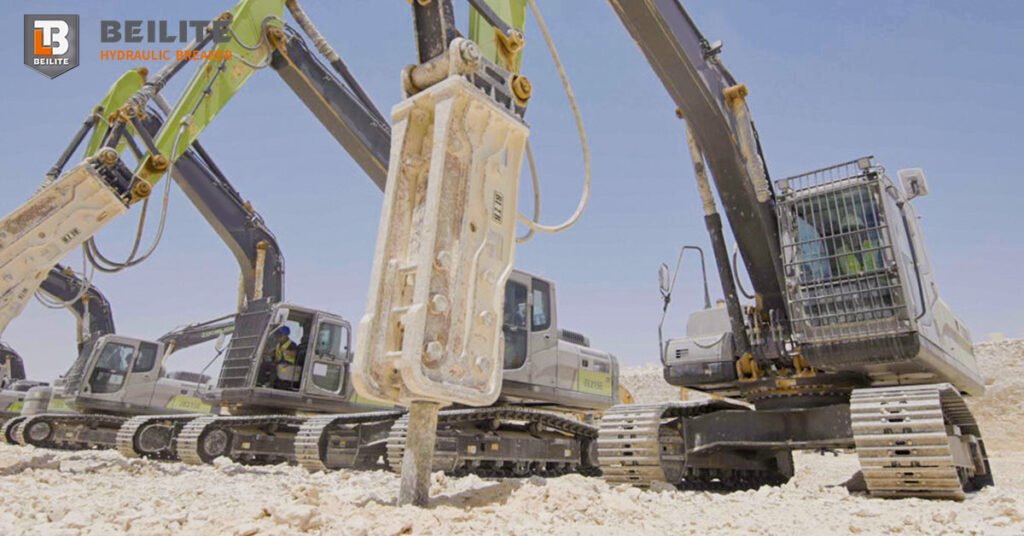
Demolition excavators are configured for dismantling buildings and large structures. Depending on their design, they can use hydraulic breakers, crushers, shears, and other specialized attachments.
The machine must be configured for the required reach, attachment weight, and site safety conditions.
2. Common Excavator Applications Across Industries
The right excavator can perform different tasks by changing its attachment.
| Industry | Common applications |
|---|---|
| Construction | Foundation digging, trenching, earthmoving and loading |
| Mining and quarrying | Overburden removal, material handling and rock breaking |
| Demolition | Concrete breaking and structural dismantling |
| Road construction | Drainage, road preparation and excavation |
| Agriculture | Land clearing, pond digging and drainage |
| Infrastructure | Pipeline installation, railway and utility construction |
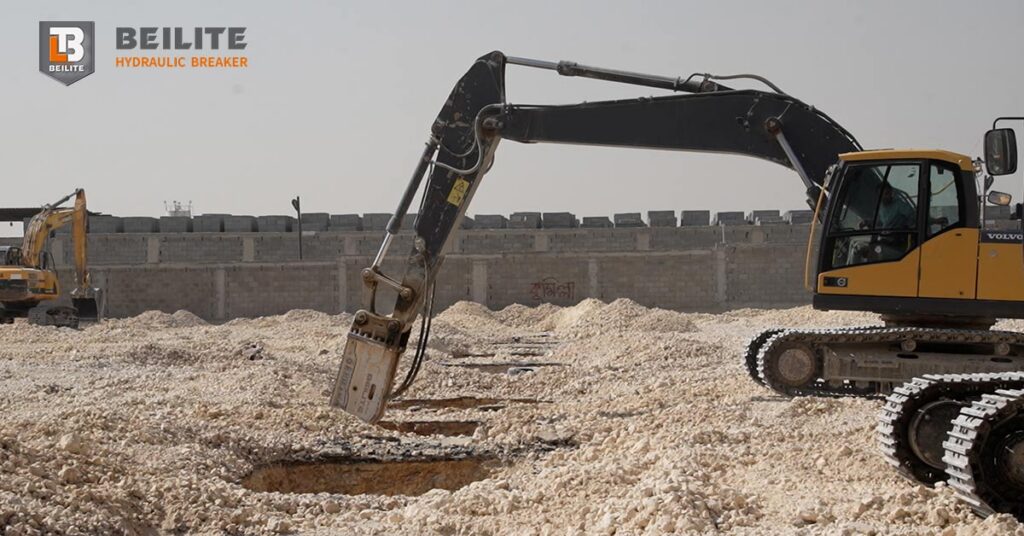
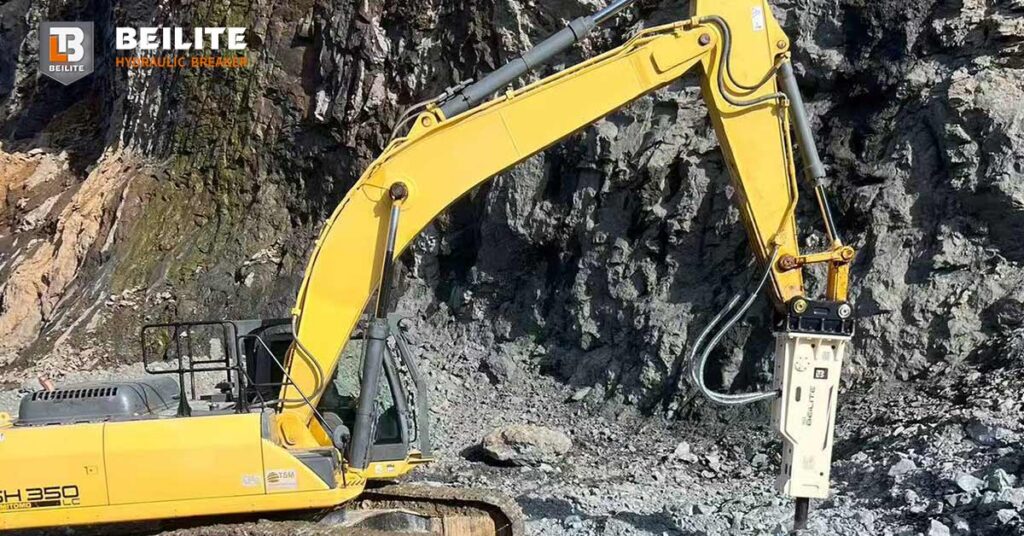
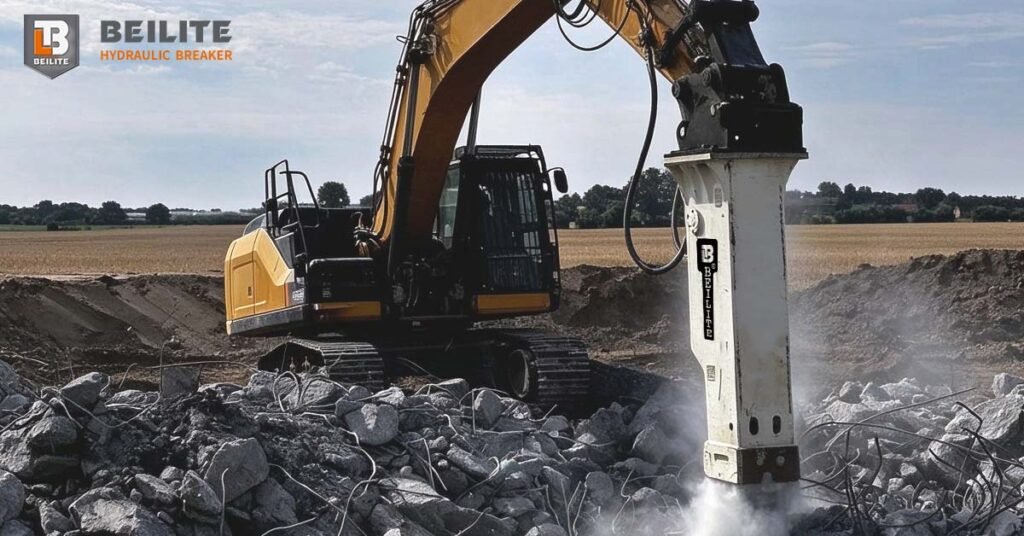
For example, a crawler excavator equipped with a hydraulic breaker can break hard rock or concrete, while the same machine with a digging bucket can carry out excavation and material removal.
3. Common Excavator Attachments and Their Uses
Excavator attachments allow one machine to perform multiple tasks without purchasing separate equipment for every application.
The most common attachments include:
- Digging buckets: Used for excavation, trenching, and loading soil.
- Grading buckets: Used for levelling, ditch cleaning, and finishing work.
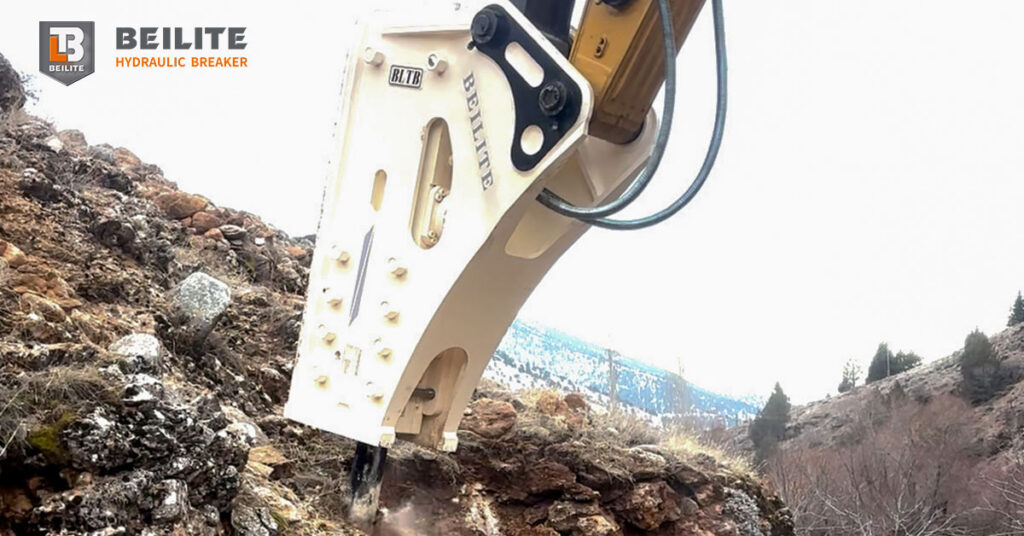
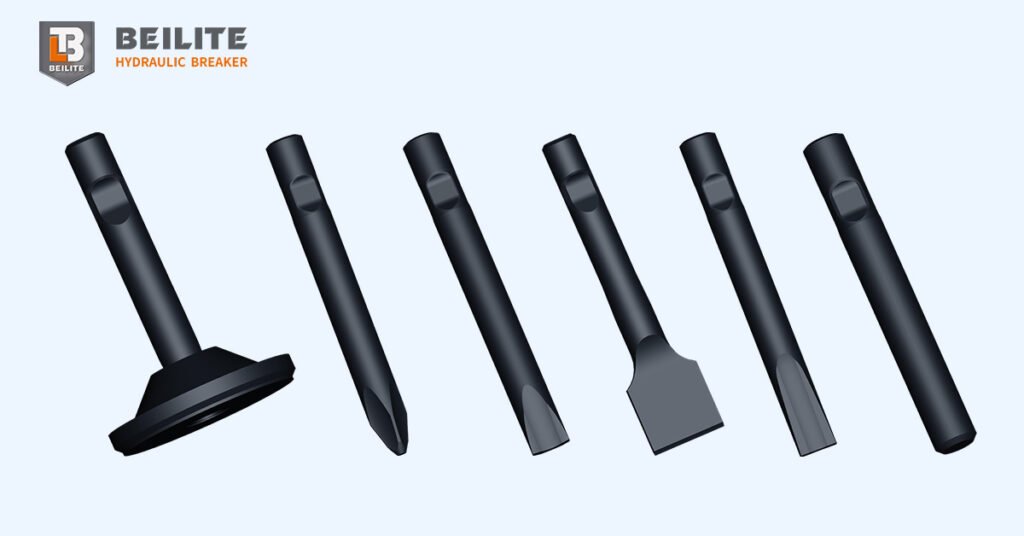
- Hydraulic breakers: Used for breaking concrete, rock, asphalt, and hard material.
- Hydraulic grapples: Used for handling demolition debris, scrap, timber, and irregular materials.
- Rippers: Used to loosen compacted soil and fractured rock.
- Augers: Used for drilling holes for posts, foundations, and other applications.
- Compaction plates: Used for compacting soil and backfill.
Choosing the correct attachment improves machine versatility, but compatibility must be confirmed before installation.
4. Excavator Attachment Compatibility: What Should You Check?
One of the most important considerations when buying an excavator or attachment is compatibility.
An attachment that physically fits the excavator may still be unsuitable for its hydraulic system or operating capacity.
Check these six factors before purchasing:
1. Excavator operating weight
The attachment must be suitable for the excavator’s size and lifting capacity. An excessively heavy attachment can affect stability and machine performance.
2. Hydraulic oil flow
Hydraulic attachments require a specified oil flow, measured in liters per minute (L/min). The excavator’s auxiliary circuit must provide sufficient flow.
3. Working pressure
Check that the excavator’s hydraulic pressure meets the attachment manufacturer’s requirements. Incorrect pressure settings can reduce performance or damage components.
4. Mounting dimensions
Confirm pin diameter, pin-center distance, mounting width, and coupler compatibility. Do not assume that attachments fit simply because two excavators belong to the same weight class.
5. Hydraulic connections
Check hose sizes, connection types, return-line requirements, and any additional case-drain or control requirements.
6. Machine stability and configuration
Consider attachment weight, working reach, counterweight, boom configuration, and the excavator manufacturer’s operating limits.
For hydraulic breakers, matching operating weight, hydraulic flow, working pressure, and mounting dimensions is particularly important.
5. How to Choose the Right Excavator Before Buying
Whether you are purchasing a new or used excavator, focus on the machine’s suitability for your actual workload rather than choosing based on price alone.
Define your application. Determine whether the machine will be used for construction, mining, quarrying, demolition, or general earthmoving.
Choose the correct operating weight. Consider digging depth, reach, lifting requirements, ground conditions, and transportation limitations.
Compare engine and hydraulic performance. Evaluate engine power, fuel consumption, hydraulic capacity, and the ability to operate your intended attachments.
Check spare parts and after-sales support. Reliable technical assistance and accessible replacement parts can reduce unexpected downtime.
Calculate total ownership costs. Include purchase price, fuel, servicing, repairs, transportation, and attachment expenses.
Inspect used excavators carefully. Check the engine, hydraulic pumps, cylinders, undercarriage, boom, arm, operating hours, and maintenance history.
A machine that matches your application and receives proper maintenance is generally a better investment than one selected only because it has a lower purchase price.
6. Choosing the Right Hydraulic Breaker for Your Excavator
If your work involves rock excavation, quarrying, concrete demolition, or breaking oversized material, a hydraulic breaker can turn your excavator into an effective breaking machine.
However, selecting a breaker based only on excavator tonnage is not enough.
Beilite Hydraulic Breakers provide excavator-mounted breaking solutions for suitable construction, mining, quarrying, and demolition applications.
Before selecting a model, confirm:
- Excavator operating weight and model
- Available hydraulic oil flow
- Required working pressure
- Breaker operating weight
- Mounting and bracket dimensions
- Application and material hardness
Choosing a compatible hydraulic breaker helps achieve reliable operation and avoid unnecessary hydraulic and mechanical stress.
Explore the Beilite Hydraulic Breaker Range and Hydraulic Breaker Specifications to find a suitable model for your excavator.
Frequently Asked Questions
1. What are the main types of excavators?
The main types include mini excavators, crawler excavators, wheeled excavators, long-reach excavators, and specialized demolition excavators.
2. What is the most versatile excavator attachment?
The answer depends on the application. Digging buckets are essential for general excavation, while hydraulic breakers, grapples, augers, and rippers provide additional capabilities for specialized work.
3. How do I know if an attachment fits my excavator?
Check the excavator’s operating weight, mounting dimensions, coupler type, hydraulic flow, working pressure, and attachment weight. Confirm compatibility with the machine and attachment manufacturers before purchasing.
4. Can one excavator use different attachments?
Yes. An excavator can operate multiple compatible attachments, provided its mounting system, hydraulic circuits, operating capacity, and configuration support them.
5. What should I check before buying a used excavator?
Inspect the engine, hydraulic system, undercarriage, boom, arm, cylinders, structural condition, operating hours, and service records. A professional inspection is recommended before purchase.